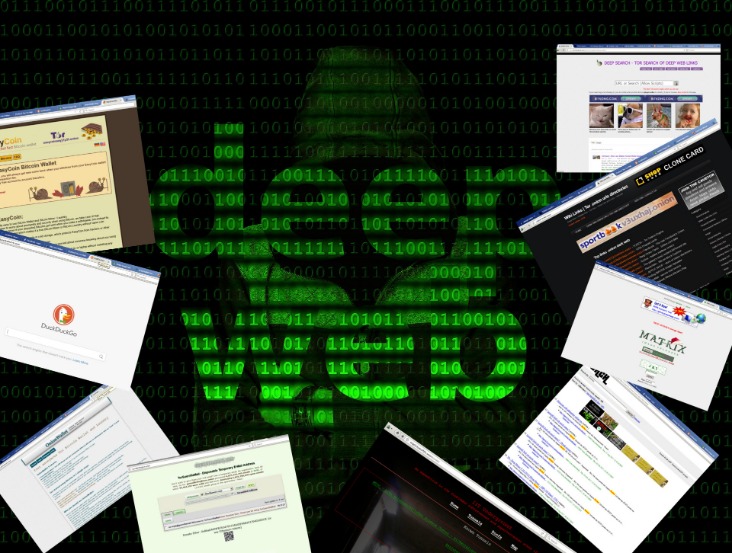
The case naming Annibale was unsealed today when Brazilian authorities executed a search warrant at his residence. The news comes during a turbulent time for darknet markets with the most prominent sites closing down in recent months, either voluntarily or as a result of police activity. It is not clear which German authorities were behind the seizure, although Europol described it as happening alongside the seizure of the Hydra marketplace’s infrastructure.
Germany Arrests Alleged Darknet Purveyor Of Weapons, Drugs
🔮 Future darknet markets will lean even more heavily into decentralization, using blockchain-based platforms and encrypted messaging to avoid centralized infrastructure. Law enforcement will likely continue to shift toward data-centric operations and partnerships with crypto-forensics firms to keep pace. Expect another wave of takedowns targeting emerging platforms in the next 12 to 18 months. Just a month earlier, Operation RapTor led to the arrest of 270 suspects from ten countries and the seizure of two tonnes of drugs, €184 million in cash and crypto, and 180 firearms. Much of this progress stems from intelligence obtained after the fall of several other dark web marketplaces, including Nemesis, Bohemia, Tor2Door, and Kingdom Market. Darknet markets, which are also known as cryptomarkets, offer a platform for the trading of a wide variety of illegal goods and services in a setting that is largely anonymous.
Financial Markets, Financial Institutions, And Fiscal Service
At the same time, experts are calling for more education about darknet dangers – especially for younger users who discover access to such markets through Telegram or forums. In addition to the administrator, so-called “moderators” are also in focus – they organized internal processes on the platform, mediated disputes between buyers and sellers, and checked content. These digital helpers usually operated anonymously and distributed worldwide – but during Operation “Deep Sentinel”, they too were unmasked. The agency, based in The Hague, built intelligence based on evidence from Germany, which it said seized the marketplace’s “criminal infrastructure” in December 2021. For the first time, FBI agents from all the bureau’s field offices also visited buyers to tell them about the overdose danger of pills sold online, which are often disguised to look like prescription drugs. According to the announcement made by Europol, the primary products that vendors sold on the marketplace were illegal substances, counterfeit money and credit card details, malware, and anonymous SIM cards.
The Dark Fox Market is a comprehensive online marketplace that provides users with access to a wide variety of features. Only trusted vendors may make use of the Early Finalization or the 50 percent FE option. PGP support and two-factor authentication are both available on the market as an additional layer of security.
Case Study: Hydra Market’s Migration To Telegram

This monumental action, part of a joint initiative codenamed Operation Deep Sentinel, was led by German authorities in collaboration with Europol and Eurojust. The multi-day enforcement efforts between June 11 and 13 spanned six nations — Germany, the Netherlands, Spain, Sweden, Romania, and others — and led to multiple arrests, asset seizures, and a complete takedown of the platform’s infrastructure. The seized drugs included 141 pounds of fentanyl or fentanyl-laced narcotics, more than 569 pounds of amphetamines, 95 pounds of cocaine, 95 pounds of MDMA and 22 pounds of LSD and ecstasy pills, authorities said. Launched in 2020, Archetyp was Europe’s longest-serving drug market at the time of its takedown last week, and authorities today confirmed a number of key arrests. The seized drugs include 64 kilograms (141 pounds) of fentanyl or fentanyl-laced narcotics; over 258 kilograms (569 pounds) of amphetamines; 43 kilograms (95 pounds) of cocaine; 43 kilogram (95 pounds) of MDMA; and over 10 kilograms (22 pounds) of LSD and ecstasy pills, authorities said. The largest number of arrests — 153 — were made in the United States, followed by the United Kingdom with 55 and Germany with 52, according to the European Union law enforcement agency Europol, which coordinated the worldwide operation.
Cybersecurity Workforce Trends In 2025 – Skills Gap, Diversity And SOC Readiness
The information that was stored on those servers will lead them to the moderators, sellers, and customers of the marketplace. On the homepage of Cannazon, it is made abundantly clear that the company’s objective is to differentiate the sale of its drugs from the sale of other harmful and illegal substances. It provides a list of items that are categorically not allowed to be sold through its marketplace. The German police’s largest bust came in April 2022, when its investigators disrupted the world’s largest darknet market, Hydra, which had 17,000,000 members and 19,000 registered sellers. The shutdown of Nemesis and the prosecution of its operators “are a further blow to underground economy actors operating on the dark web and demonstrate the effectiveness of international law enforcement in the digital space,” the BKA said in a press release. The data from this week’s seizures will be the basis for further investigations against sellers and users who used the platform, German authorities said.
Department of the Treasury’s Office of Foreign Assets Control (OFAC) sanctioned Iran-based Behrouz Parsarad (Parsarad), the sole administrator of Nemesis, an online darknet marketplace, which was subject of an international law enforcement operation and was taken down in 2024. Prior to its takedown by law enforcement, narcotics traffickers and cybercriminals openly traded in illegal drugs and services on Nemesis, which was designed with built-in money laundering features. Nemesis had over 30,000 active users and 1,000 vendors and facilitated the sale of nearly $30 million worth of drugs around the world between 2021 and 2024, including to the United States. Today’s sanctions designation is OFAC’s first action as a member of the Federal Bureau of Investigation (FBI)-led interagency Joint Criminal Opioid and Darknet Enforcement (JCODE) Team.
After discontinuing his apprenticeship in 2013, his boss was disappointed, but what triggered the rather surprising career change remains completely unclear. What is clear is that Maximilian decided he wanted to be his own boss and declared himself to be a web designer. This was when he began the clandestine setup of distribution channels for his steadily growing drug business. Mr Zwiebel says his investigators then took their evidence to a German judge to get permission to approach the server company and issue a takedown notice. “We got some hints through monitoring darknet activity from US officials. So we started in July or August last year to dig deeper and to investigate this field,” he says.
Nemesis Darknet Marketplace Raided In Germany-led Operation
- The seized drugs include 64 kilograms (141 pounds) of fentanyl or fentanyl-laced narcotics; over 258 kilograms (569 pounds) of amphetamines; 43 kilograms (95 pounds) of cocaine; 43 kilogram (95 pounds) of MDMA; and over 10 kilograms (22 pounds) of LSD and ecstasy pills, authorities said.
- Hydra specialised in same-day ‘dead drop’ services, where drug dealers (vendors) hide packages in public places before informing customers of the pick-up location.
- The police had nothing on him online, until they were right in his room, which served as his warehouse and his headquarters.
- Past operations against cybercrime markets suggest that even though Nemesis’s infrastructure was shut down, the criminals might retain the ability to restart their operations somewhere else.
Alongside Europol, law enforcement agencies from Germany, Australia, Denmark, Moldova, Ukraine, the United Kingdom (represented by the National Crime Agency), and the United States (represented by the DEA, FBI, and IRS) took part in the operation. An Australian national was detained by German authorities over the weekend on suspicion of being the person responsible for operating a marketplace located close to the border between Germany and Denmark. During the same operation, police officers in Europe, South America, Asia, and the United States also seized more than 2 tonnes of drugs (including amphetamines, cocaine, ketamine, opioids, and cannabis), over €184 million ($207 million) in cash and cryptocurrency, and over 180 firearms. Vendors and users also coordinated their migration onto other platforms through encrypted messaging tools such as XMPP and Tox, both of which had also become fall-back communication channels following the takedown of illegal marketplace AlphaBay in 2017.
Cyber-attack On UK Contractor Affects Islanders
Despite all of these precautions, the drug lord made two vital errors that ultimately led to his arrest. Although the defendant appeared nonchalant, even smiling at times during his sentencing, Judge Göbel agreed the confession was worthy of a lighter sentence and ordered Maximillian S to spend seven years behind bars. During the trial, Judge Norbert Göbel said the defendant had been engaged in “highly criminal activity” and “flogged almost a tonne of narcotics” since late 2013. “This computer stuff may make a lot of things easier, but it is just as bad as dealing on the street,” he said, reported Motherboard. HE was one of Germany’s most notorious crime lords — responsible for a multi-million dollar drug business.
- Beyond arrests and seizures of servers, it’s important for governments to warn people about the dangers of buying illegal drugs online, said FBI Deputy Director Paul M. Abbate.
- Yet, the successful seizure of infrastructure and key individuals proves that no system is invulnerable to coordinated, cross-border law enforcement efforts.
- Archetyp encouraged vendors to re-establish their reputations through Pretty Good Privacy (PGP)-signed migration messages – cryptographically signed proofs that linked new accounts to profiles from previous marketplaces.
- Still, the data acquired from this operation will likely fuel years of follow-up actions and targeted arrests.
This cooperative model could serve as a blueprint for future operations targeting other illicit darknet platforms. Archetyp’s use of Monero cryptocurrency highlights the challenges authorities face in tracking financial flows on the darknet. Monero’s privacy features make tracing transactions notoriously difficult, adding complexity to investigations. Yet, the successful seizure of infrastructure and key individuals proves that no system is invulnerable to coordinated, cross-border law enforcement efforts. The investigators identified the suspects (many behind thousands of sales on illicit online marketplaces) using intelligence collected following takedowns of multiple dark web markets, including Nemesis, Bohemia, Tor2Door, and Kingdom Market.
‘It’s Happening Everywhere’: 1 In 3 ICE Detainees Held In Overcrowded Facilities, Data Show
It added that a number of the suspects were considered “high-value targets” by police, and that investigations to identify additional people behind dark web accounts were still ongoing. But most of all, Shiny Flakes made it incredibly easy for customers with no dark web experience to order drugs over the internet and was able to draw in countless consumers with his image-heavy web shop. Shiny Flakes offered basically everything, from MDMA and ecstasy to speed and crystal meth to LSD and marijuana, which he stopped selling occasionally because of high demand. With a Bitcoin payment, you could order whatever you liked, and Shiny Flakes always tried to be service oriented. Judge Göbel remarked on the grounds for the sentence as well as on the digitization of the drug trade, which has become an alternative to the traditional trade by means of darknet black markets and anonymous payment methods. “Since the onset of the COVID-19 pandemic, more people have turned to the darknet than ever before to buy drugs,” Monaco said.
German police claim to have disrupted the country’s most popular underground market for drugs and cybercrime. It was in this vacuum that Archetyp emerged, eventually becoming a key landing zone for vendors displaced by earlier market collapses. Archetyp encouraged vendors to re-establish their reputations through Pretty Good Privacy (PGP)-signed migration messages – cryptographically signed proofs that linked new accounts to profiles from previous marketplaces. This allowed buyers to verify that they were transacting with the same vendor as before.
Authorities say drugs, counterfeit money, stolen credit card data, anonymous SIM cards and malware were all traded on the site, which had a half a million users and transacted business in cryptocurrencies equivalent to a value of €140 million ($170 million). Where one marketplace collapses, Telegram facilitates dozens of replacements, each with lower visibility and faster growth curves. Instead of disappearing, Hydra’s network simply adapted to a new medium, underscoring the difficulty of suppressing illicit commerce with infrastructure takedowns alone.
In total, law enforcement officers seized 47 smartphones, 45 computers, narcotics, and assets worth €7.8 million from all suspects during Operation Deep Sentinel. In the weeks leading up to its takedown, Archetyp had already started to show signs of trouble. Users encountered ‘maintenance’ messages and several alternative access links failed to load.